Posts

Showing posts with the label Climate Change

The Future can be Greener

Image
A Parallel world Often, I wonder how different our world would have been if we had not discovered fossil energy or rather the use of it. Putting my assumption into a clearer perspective, I believe humanity would have found another means to powering up our planet and, perhaps the less talked about global problems might have been the more prominent. In a world of no fossil fuel, to a great deal of extent, the possibility of climate change happening might not be overruled, but the pace of the change would have been more proportional to the natural adaptive capability of not just humanity but the whole planet’s ecosystem.   The gains of not having to deal with the threats of the abrupt change in climatic conditions would probably have saved the world a lot in terms of financial commitment and time. These resources might have been channeled to solving other fundamental problems facing humanity. Perhaps, issues like poverty and global inequality would have worn ...

Chapter Next: Time to Adopt a Polar Bear

Image
History 101 Photo credit: Pixabay Education has remained an important tool all through the history of mankind. Apparently, posterity would have been nearly impossible without the ability to teach and transfer the knowledge accumulated over time from experience and happenings. Mankind has come a long way in the history of planet earth, many thanks to the knowledge passed down over many generations, we have learned to do more than our ancestors would have imagined. So, knowledge is indeed power. For thousands of years, we have survived several occurrences, we tamed the wildness of our planet, we navigated the world, and we even traveled beyond the skies. With every feat, we became more knowledgeable, wielding the power of science to manipulate the natural to conform to our desires. Then, we went to war against each other. Our knowledge became weapons and when it seemed we would rid the earth of our kind, we came back to our senses and we sheathed our swords, pledging ...

The signs of the Future from Today

Image
  A lot has happened in the climate change scene in the last few months, but I haven’t really found enough motivation to update my writings for a while.  Why? As difficult as it is to give up on a good cause, at times it becomes necessary to take a back seat in order to reflect objectively and see through a different lens. Often, I ask myself if we will eventually get our acts together regarding climate change, eco-sustainability and the race to finding a balance between the needs of man and the rights of nature. Unfortunately, the unpromising atmosphere that abounds in the corridors of global power and influence usually results in a rather pessimistic conclusion after such deep reflections. I will try as much as possible to keep this simple - avoiding complex vocabulary so that my reflections can cut across.  Almost every news channel carried the alarming news of the recent findings and projections of the Intergovernmental panel on climate change (IPC...

An Opinion Piece on Bio-cultural Ethics

Image
The relationship between humans and their immediate environment is much more complex than we have always thought. This complexity is well defined in the relationship between biological and cultural diversity which has been found to be more direct, and that each influences the other to an extent. In a more explicit way, bio-cultural adaptability influences homogeneity, and which consequently results in habitat isolation for the reason of adaptive modification. The introduction of bio-cultural ethics is meant to change the narrative of ecological relationship from the predominantly mono-system status into the new possibility of recognizing the place of other pre-existing systems operating within an immediate environment and without necessarily changing the local setting that may exist. This is a new school of thought termed bio-co-existence, which I personally find intriguing.  Bio-cultural conservation has a lot to offer with regards to the prevailing environmental pro...

As We Look Up to Bonn-A first Day Report from UNFCCC COP23

Image
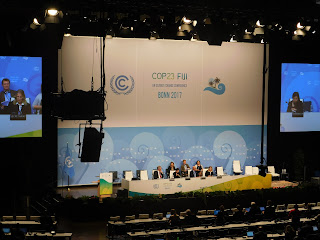
I t’s the first day at the much-anticipated United Nations Framework Convention on Climate Change (UNFCCC) Conference of the Parties (COP) 23, also called ‘Pacific COP’ with regards to Fiji, the host country of this year’s summit. Fiji, an island state, has been grappling with the adverse impacts of climate change. Cyclone Winston ravaged Fiji in February 2016, taking the lives of 44 people, destroying homes, uprooting families, and inflicting serious damage on the nation’s sugar crop, a foundation of the Fijian economy 1 . Bonn, a historical city in Germany, serves as the host venue for the approximately 25,000 participants at COP this year. As always, the event is attended by national governments, UN specialized agencies, intergovernmental organizations, and NGOs. A rather innovative concept of having to rename the former Green and Blue Zones as the Bonn zone and Bula zone (Bula means hello in the Fijian language)- A number of words from the language have been notably...

"2016, So Many Pieces To Put Together"

Image
T he last days of 2015 were yet the most celebrated period in the climate change history as the world progressed positively on a clear cut path towards a climate smart future-The Paris Climate deal was struck. This created a sort of balance in the expectations of the parties involved in the climate struggles. The year ended on a more promising note of confidence with regards to the potential outlook of events in the coming years. Now another year is closing. Some 11 months backwards, the world ushered in a new year of optimism and strong potentials for the advancement of the global climate cause. However, the scene of events was a little quiet for the most part of the first and second quarter of the year with most countries busy tailoring their respective Intended Nationally Determined Contribution to allow for proper transitioning into a more agreeable nationally adopted strategies (in the global term could be referred to as the Nationally determined contribution, as the “In...

The Change Is Here!

Image
The first quarter of the year in Nigeria has always been noted as usually the hottest period with regards to weather variability and default seasonal pattern. This period is usually characterized with high solar intensity and consequently high temperature build-up which in a lot of ways causes a great deal of discomfort to people. However, the hot period is often short termed as the raining season breaks the hot cycle with the usually long wet months which invariably usher in the period of plenty (Food production). However, the first quarter of 2016 has recorded the hottest so far in this part of the world. The temperature was unusually higher than favorably normal while the accompanied heat wave broke every precedent record.  And just as if the physiological discomfort is not enough, some food items have taken on the side of becoming very out of reach for the common man. An instance is that of the common and once affordable tomato fruit that has now become so scarce a...

The Curse of the Black Gold

Image
Nigeria is the most populous black nation on earth and is notably recognized within the frame of a number of attached identities, such as being the biggest producer of petroleum in Africa. While it is invariably advancing to become one of the top producers in the world, the country has really come a long way as a fossil fuel-based economy to achieving yet another identity as one of the biggest emitters of greenhouse gases in Africa. The country is yet to find a place among the fully industrialized nations in the world that have been well noted as the all time big emitters. In a way, it has gained commonness for being in the category of generating more green house gases, mostly from the fossil fuel industry, which is the basic bedrock of the nation’s economy. Despite the long standing credentials; the cumulative years of being an oil producing nation with the occasional rise and boom seasons of the oil trade, one would expect a massive all round development and being in the...

"Thanks to global warming the Anophelese family grows stronger"

Image
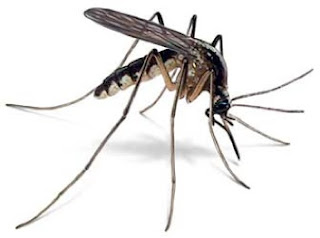
  Zika virus is fast making headlines all over the world as a new strain of danger in the disease world and in a rather more complicated way, compounding the already existing problem of other life threatening diseases such as Malaria which invariably happens to share a base of similar hosts (Mosquitoes) with the new viral strain. Malaria has dealt with humanity for as long as the records could trace out and most significantly in the humid- tropical world and up till now it still represents the number one causative factor in the case of infant mortality with respect to the developing world. The anopheles family seems to be a bane on humanity as they seem to be capable of wiping out a significant percentage of the human population with their potent killer disease laden capacity. Now the whole world is under another disease scare and yet the possibility of a rapid worldwide spread is notably on the high side, thanks to globalization and to a more important fact...